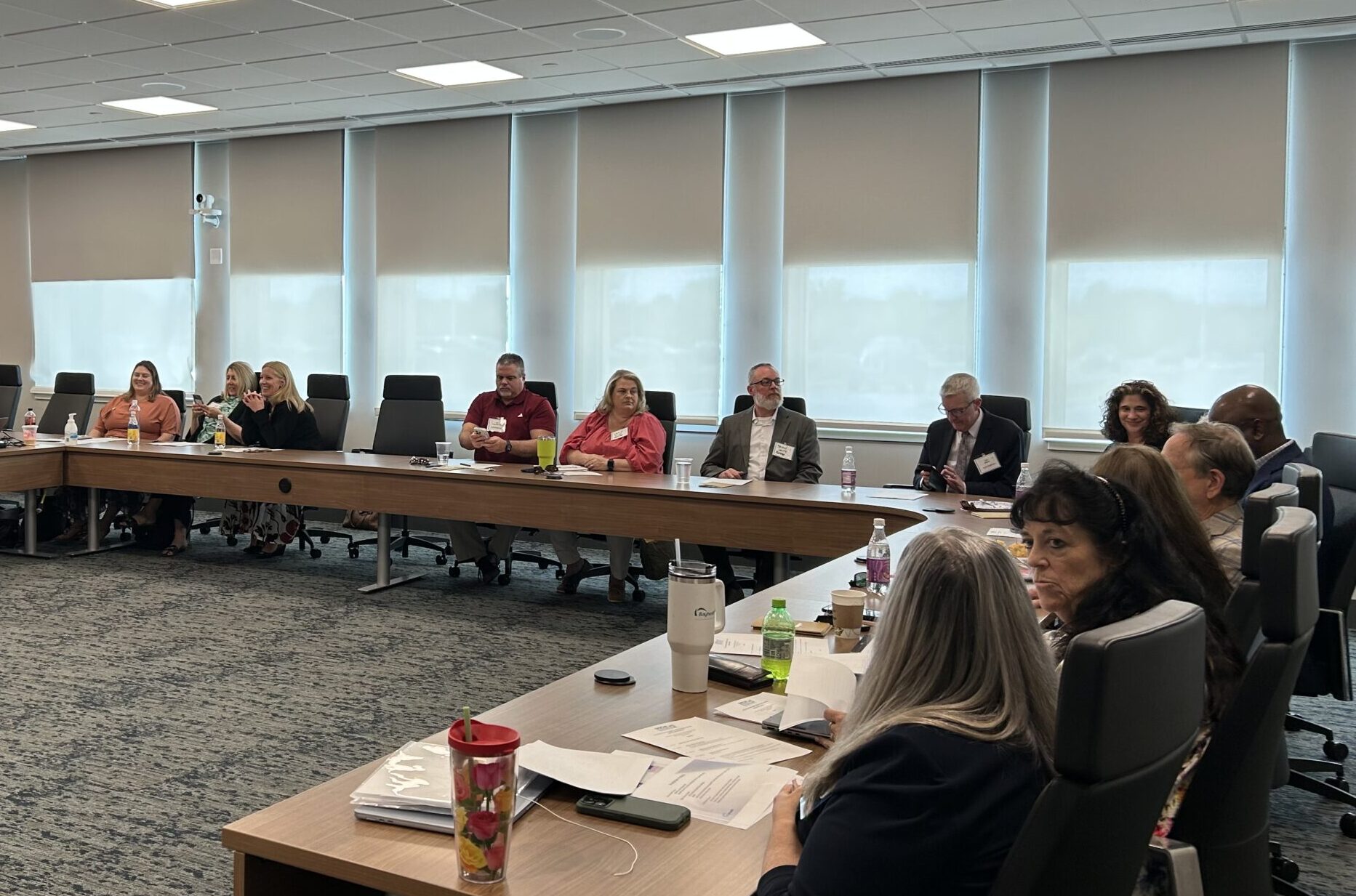
GPBCH has continued quarterly convenings for the Delaware Hospital Quality & Safety Learning Collaborative this past year, after having launched the Collaborative in fall 2025. The purpose of this Collaborative is to leverage quality and safety data, such as that from the Leapfrog Hospital Survey, to improve patient outcomes in the Delaware population. This Collaborative is hospital-driven meaning that the five DE hospitals that are participants contribute to the direction of the collaborative as well as the topics and focus areas covered. Most recently, the Collaborative convened in April for an in-person workshop and then July for a virtual webinar. Read on to learn about what the collaborative has been up to and what was covered in each of these sessions.
April In-Person Meeting
GPBCH hosted our third meeting for the Delaware Hospital Quality & Safety Learning Collaborative which was held in person at the Bayhealth Conference Center at Blue Hen on April 16, 2026. This in-person gathering focused on convening the participating hospitals to discuss the requested topics of Infections and the Leapfrog Hospital Safety Grade, which was discussed during tabletop work that split the group in two to focus on each of those topics. Attendees included relevant roles that address these areas in their hospitals, which included infection preventionists, quality and safety managers and directors, nurse leaders, performance improvement leaders, and some c-suite leaders as well. In addition to tabletop work, we heard from the Leapfrog Group’s Katie Burggraf Stewart, Director of Health Care Ratings, who presented on this year’s Hospital Survey update as well as the new Ambulatory Surgery Center Public Reporting Program that recently launched this past spring. The program wrapped up with hearing three leaders from a hospital in the cohort, Bayhealth Medical Center, about the lessons they have learned during their journey with the Leapfrog Hospital Survey, how they’ve reduced healthcare-associated infections, and lastly shared about their ambitious organizational goal of Bayhealth 2030 focusing on excelling in all five pillars of quality, people, operations, financial, and growth. We’re grateful to have been able to hear from Patricia Mullan, Senior Director, Quality, Safety & Continuous Improvement, Susan Kline, Clinical Assessments Manager, Performance Improvement, and Kelly Gardner, Senior Manager, Infection Prevention from Bayhealth. GPBCH would like to thank Bayhealth and Dr. John Fink’s team for hosting us for this meeting!
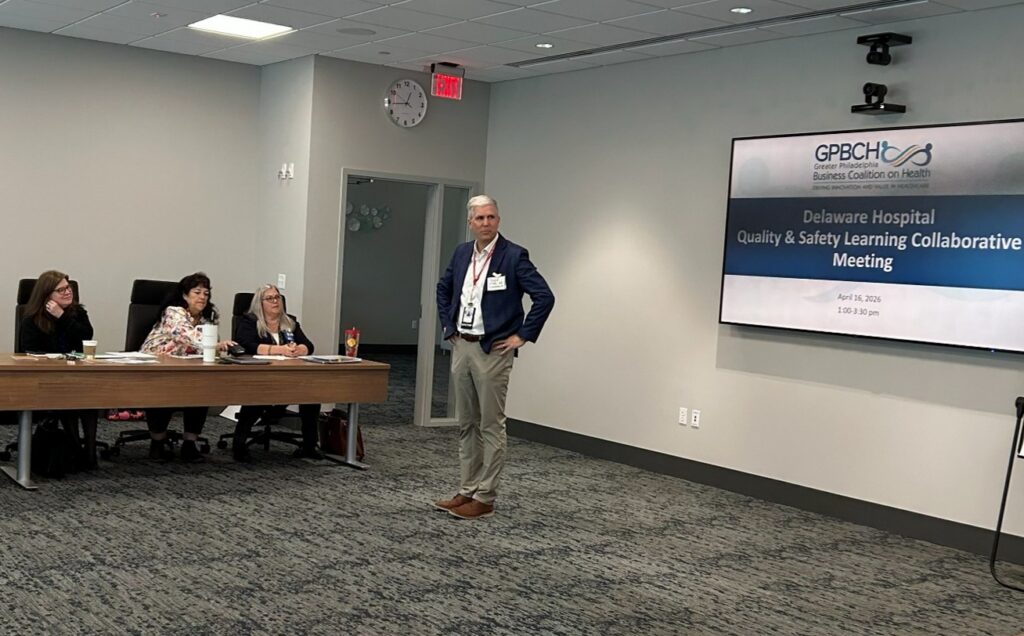
Dr. John Fink and Bayhealth colleagues providing opening remarks for the meeting
From the breakout tabletop group on Infections, we had infection preventionists of varying seniority able to share with one another about what is working well, such as educational communications with a “tip of the day” about infections sent to all staff, shifting culture with an emphasis on leadership and units owning their infection prevention measures and improvement, and using risk assessment to determine areas of focus and priorities within infections measures. Additionally, the breakout group discussed the challenges they are facing at their organizations, which touched on difficulty in engaging providers with potentially adopting new systems such as a digital hand hygiene monitoring program, difficulty in standardizing practices and priorities across different hospitals (especially across state lines) or as health systems continue to re-organize their internal structure, and challenges with the SSI Colon measure in particular, which has been one of the cohort’s lowest-performing infections measures over the past 3 years.
From the breakout tabletop group on the Safety Grade, patient safety and quality leaders discussed the various ways they are using the Safety Grade at their organization including using a hospital’s journey to an “A” safety grade to mobilize the organization to a collective goal and utilizing safety grades in strategic plans. Additional uses included educating staff on “the why” the organization is focusing on safety grades, utilizing internal signage about safety grades, and rounding with teams as an opportunity to engage them in the discussion. The cohort also shared that while they don’t necessarily use safety grades in their external marketing at this time, they do have some patients ask questions when they see articles about safety grades which is why they are taking the step to continue to educate staff on what the safety grade is and its importance.
Lastly, attendees were reconvened as a larger group to briefly vote on future programming priorities which included possibly developing a document of best practices to achieving a high safety grade, needing more clarity on nurse staffing measures, and wanting more information and examples on the informed consent measure (which was circulated out to the collaborative shortly after the meeting). GPBCH was grateful to have such stimulating conversation with hospital representatives.
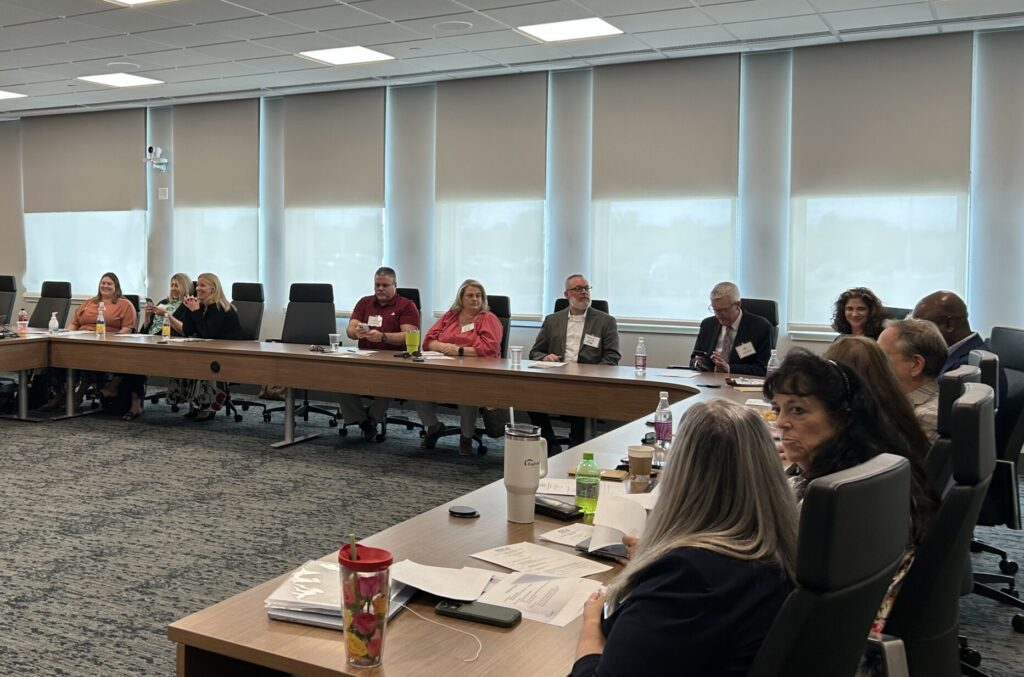
Collaborative participants greeting each other during the meeting
July Webinar
In response to our April convening, GPBCH planned a July webinar that focused on the topic of nursing workforce staffing as it relates to the Leapfrog Hospital Survey measures and the workforce staffing pipeline in the state of Delaware. We were pleased to bring in three speakers that addressed this topic hearing first from researcher and professor Matthew McHugh, PhD, RN, from the University of Pennsylvania School of Nursing followed by a discussion with Michael Quaranta of the Delaware State Chamber of Commerce and Julia Keleher of First State Educate. Michael and Julia educated the group on the Delaware State Chamber of Commerce Foundation’s newly launched multi-stakeholder project working to improve the clinical and healthcare worker pipeline across the state and the Foundation’s report that will analyze the existing problems and proposed solutions through facilitated conversations with various stakeholders over the coming months. With some of their research kicking off on this webinar, the DE State Chamber of Commerce Foundation was able to hear firsthand from nursing directors about how important and useful this project is. Through discussion and polling, hospitals were able to share that one of the most limiting factors has been retaining experienced nurses in addition to burnout, capacity, etc. Hospitals also expressed that they have been focusing on addressing workforce well-being and burnout as well as focusing on clinical education and partnerships, which is one of the key focuses of the State Chamber of Commerce Foundation’s work. Through this webinar, GPBCH was able to connect the Chamber of Commerce Foundation with any interested individuals who wish to further connect and provide feedback to them as they continue with their project.
In addition to providing attendees with a chance to engage on a project and report that will potentially inform and shape the state’s healthcare workforce staffing, attendees heard from Matthew McHugh who presented on the Leapfrog Survey’s workforce staffing measures. Dr. McHugh chairs Leapfrog’s expert panel for nursing workforce and provided some insight of the research behind how those metrics were shaped as well as provided research that his team has conducted highlighting what hospitals could do to address workforce staffing, such as: allowing clinicians to spend more time with patients, reducing the EHR burden, providing uninterrupted breaks to protect work-life balance, and improving nursing and physician staffing. He also shared the importance of improving and maintaining a good work environment, which allows for nurses’ input into clinical and organizational decisions, promotes collaboration, offers professional development and advancement opportunities, and provides adequate staffing and resources. To quote Matthew, “burnout’s harm to patient outcomes is blunted in good work environments” and “adding nurses to a broken system [leads to] under[performance]” echoing that a healthy work environment is just as important if not more important to addressing just staffing issues.
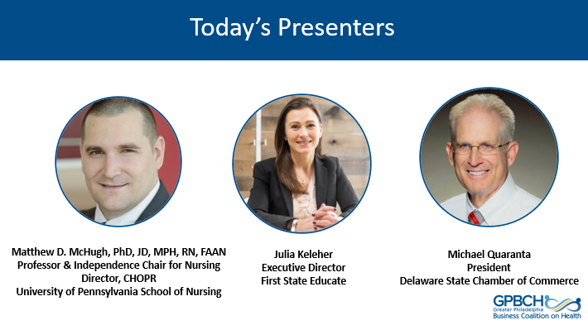
Presenter Slide from Webinar
GPBCH sits uniquely positioned to convene these players across the state with everyone working towards a united goal of addressing the workforce pipeline in healthcare and is excited to see what comes of this project. For more information on this program, please feel free to reach out to Tanika Smith (tsmith@gpbch.org) or Liz Owens (eowens@gpbch.org).